A place to call home
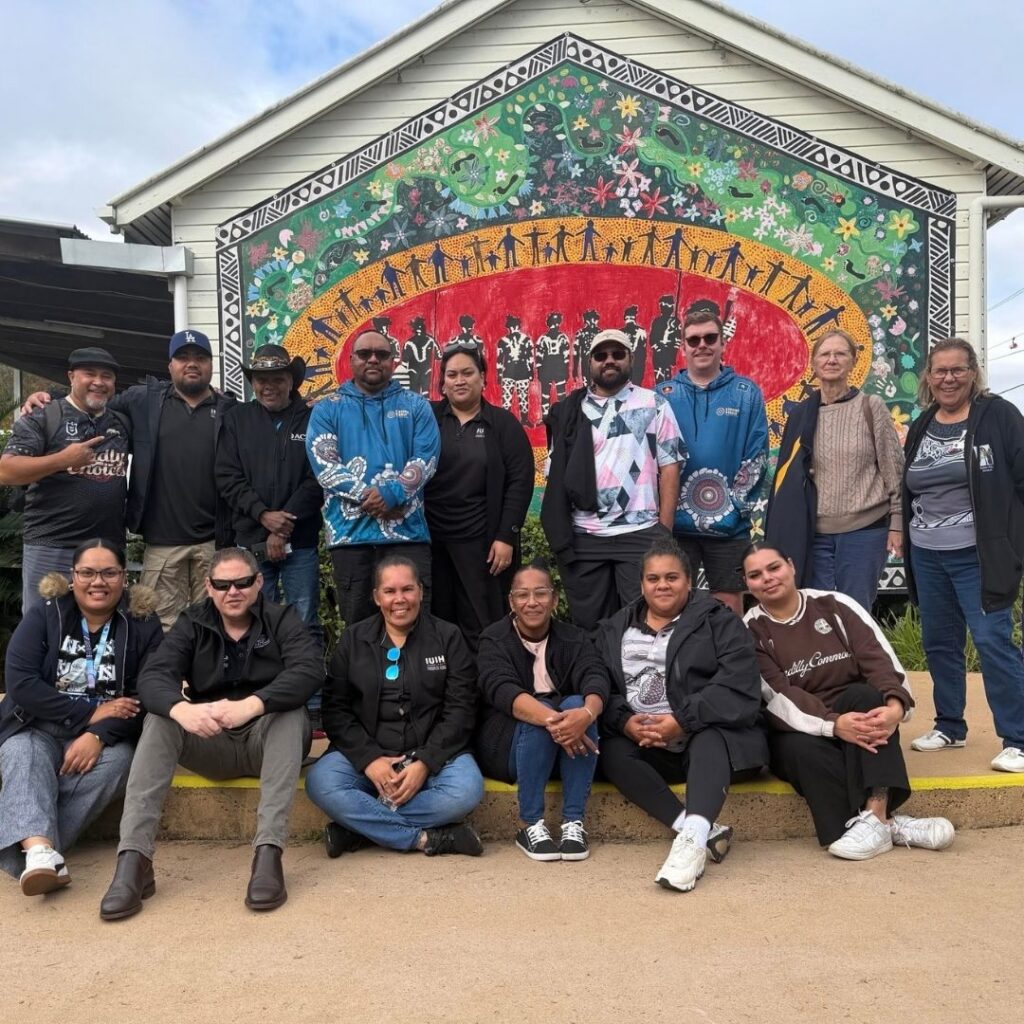
Every so often, a bell rings in the IUIH office – a sound that brings a round of applause from staff. It rings when a new home is confirmed for a client who’s been supported by the Staying Deadly team, and is a tangible reminder of the work they do to find safe, suitable housing for Mob.
For Operations Manager Raychelle Sidhu, the bell is a significant moment in a journey of support that begins when a client is referred to IUIH. After an initial search for family members or other connections who can offer a temporary place to stay, the team provides tents, bedding, blankets and socks as needed, whilst working hard in the background to find a suitable long-term housing solution.
“We never want our support to be limited to simply making a referral and stepping away,” says Raychelle. “We know it’s difficult for people to be housed – we’re in a housing crisis. We work closely with other services, including Murri Watch, Hart 4000 and Micah Projects, to gather information, coordinate services, combine resources and provide holistic wraparound support.”
It’s this collective effort that’s so central to the work the team does. IUIH is part of the Brisbane Zero consortium, which tackles homelessness via an innovative model that sees members meet once a week to share information on every person currently sleeping rough. Whilst a client may only have initial contact with one service, great benefits come from pooling their knowledge and resources. Within Brisbane Zero sits a First Nations 45 Plus cohort – a group focused on ensuring no Aboriginal and Torres Strait Islander person 45 or over is homeless or sleeping rough. “It’s really important for us to work in collaboration with other services”, says Lisa Molisi, Team Leader at Staying Deadly. “Every Friday these services come together and work towards trying to close that gap within homelessness, and we’ve seen great outcomes.”
The importance of genuine connection
With Aboriginal and Torres Strait Islander people greatly over-represented in homelessness (Mob make up 25% of homeless people, and 2% of the general population), the IUIH Staying Deadly team brings a culturally safe, yarn-centred approach to finding solutions.
“The first time I meet with a client, I try and build a connection”, says Onslow Phillips, Care Coordinator at Staying Deadly. “It really is just a yarn – I find out about their beliefs and what they’re interested in. I try not to even do any paperwork because if I do, they can see me as just another part of the system.”
The focus on connection and building genuine relationships is an effective approach that Lisa echoes.
“Because a lot of our team are Mob, it makes it a lot easier for us to connect – and it’s about connection,” she says. “Those first meetings are really just having a good yarn. If you come in with consent forms and things like that, people are not going to want to talk to you. It’s about building up a rapport.”
Once those connections are made, a significant part of the team’s work involves going along to meetings and appointments with clients – supporting them to feel safe and comfortable throughout the process of achieving their personal goals, which can go beyond housing.
“We’re a short-term support service, but within that short time, we try to achieve a long-term outcome for our clients,” says Tupou Kore, Care Coordinator at Staying Deadly. “When we meet with the client, we’ll ask them what supports they would like from us. If it’s housing, we’ll focus on housing. If it’s health, we’ll focus on health. And sometimes it’s a social check-in, to work on their mental health. Once their goals are met, we then transition them to other support services they’re comfortable with.”
In the future, the team would like to see easier, culturally safe pathways to people getting housed, as well as more houses and more availability for crisis accommodation. In the meantime, they remain driven by a sense of hope – for their clients, and for the broader future of housing services for Aboriginal and Torres Strait Islander clients.
“We want to help our Mob, and to see change,” says Lisa. “We want them to see that there’s a lot of hope, regardless of the situation they may be in and the current challenges they may be facing. We want them to know there’s hope at the end of it all – and we want to get better outcomes for Mob.”

IUIH granted Administering Institute status by the National Health and Medical Research Council
October 1, 2026
Your pharmacist, walking alongside you
September 25, 2026
POWA adult traineeship opportunities – September
September 8, 2026
IUIH granted Administering Institute status by the National Health and Medical Research Council
October 1, 2026
Your pharmacist, walking alongside you
September 25, 2026
POWA adult traineeship opportunities – September
September 8, 2026